
Slabs That Handle Actual Load Patterns
Concrete Services in Lake Jackson for foundations, driveways, and flatwork requiring strength, proper drainage, and resistance to Gulf Coast soil conditions
Proper concrete placement starts with understanding what the slab will support and how Brazoria County soil conditions affect long-term stability. Big Tex Steel provides concrete services for residential and commercial applications throughout Lake Jackson, including foundations for metal buildings, driveways designed for heavy equipment traffic, and flatwork for outdoor work areas. Each installation accounts for load requirements, drainage patterns, and soil bearing capacity to prevent cracking, settling, and drainage failures that compromise functionality.
Concrete work involves more than pouring and finishing—subgrade preparation determines whether the slab remains level or develops voids underneath as soil shifts, reinforcement placement controls crack patterns under load, and surface slope directs water away from buildings rather than allowing pooling that accelerates deterioration. In areas with expansive clay soils, proper base preparation becomes critical to prevent differential settlement as moisture content changes seasonally.
Request a site assessment to evaluate soil conditions and determine concrete specifications for your project.
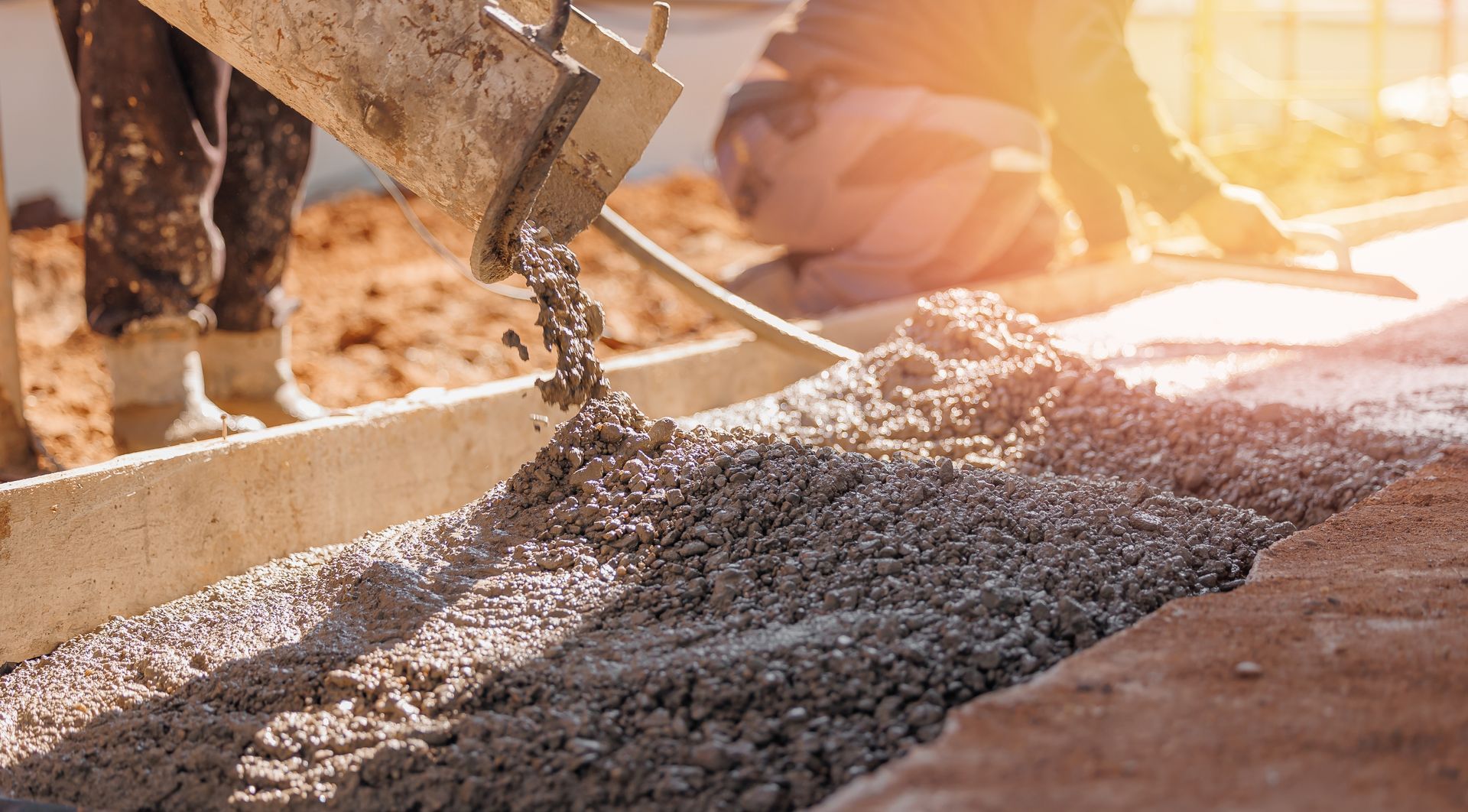
What Proper Concrete Installation Requires
Site preparation begins with removing organic material and unsuitable soil, then compacting a stable base that won't compress unevenly under the concrete weight. Rebar or wire mesh placement provides tensile strength that plain concrete lacks, controlling crack width and preventing sections from separating when minor cracks do develop. Mix design varies based on application—driveways handling heavy equipment need higher compressive strength and possibly fiber reinforcement, while residential walkways use standard mixes with appropriate air entrainment for freeze-thaw resistance.
After curing completes, properly installed concrete drains water away from structures without forming low spots where puddles collect, maintains level surfaces without differential settlement that creates trip hazards or equipment clearance problems, and develops minimal cracking beyond intentional control joints. Building foundations remain stable under vertical loads without corner uplift or edge cracking, and outdoor slabs resist surface scaling even with repeated wet-dry cycles and occasional chemical exposure from stored materials.
Project sizing depends on intended use rather than arbitrary dimensions—shop floors need thickness and reinforcement calculated for equipment wheel loads and point loads from storage racks, residential driveways require different specifications than commercial access drives handling delivery trucks, and foundation slabs integrate with building design to provide anchor points for structural columns. Drainage considerations may require thickened edges, perimeter drains, or surface grading that directs runoff toward collection systems rather than adjacent properties.
What Property Owners Usually Ask
Concrete projects represent significant investments, and clients in Lake Jackson typically want to understand how thickness choices, soil conditions, and curing requirements affect both upfront costs and long-term performance.
What determines the right concrete thickness for different applications?
Thickness depends on load intensity and frequency—residential driveways typically use four inches for passenger vehicles, while shop floors supporting forklifts or heavy machinery require six inches or more with reinforced edges where concentrated loads occur.
How do Lake Jackson soil conditions affect foundation design?
Expansive clay soils common in Brazoria County swell when wet and shrink when dry, creating upward and downward forces that can crack slabs—proper base preparation with non-expansive fill and moisture barriers helps isolate concrete from these movements.
When can newly poured concrete handle vehicle traffic?
Concrete reaches sufficient strength for light foot traffic within 24 to 48 hours, but vehicle loads should wait at least seven days, and heavy equipment or fork trucks need the full 28-day cure period to avoid surface damage and internal cracking.
Why do control joints get cut into concrete surfaces?Why do control joints get cut into concrete surfaces?
Control joints create intentional weak points where concrete cracks in straight lines rather than random patterns, making any cracking less visible and preventing crack propagation that could compromise structural integrity.
What maintenance extends concrete service life?
Sealing concrete surfaces every few years reduces moisture penetration and chemical absorption, cleaning oil spills promptly prevents staining and surface degradation, and addressing drainage problems quickly prevents erosion underneath the slab that leads to voids and settling.
Big Tex Steel sizes concrete installations based on structural requirements and site-specific conditions rather than using one-size-fits-all approaches. Contact us at (737) 247-1099 for concrete estimates tailored to your residential or commercial project.