
Ground Conditions That Support Structures
Dirt Work and Site Preparation in Lake Jackson for residential, commercial, and rural land requiring grading, drainage correction, and stable building pads
Unprepared building sites create problems that show up months after construction—foundations crack as fill settles unevenly, water pools against buildings because surface grading slopes the wrong direction, and access drives turn to mud because subgrade wasn't compacted before gravel placement. Site preparation work by Big Tex Steel establishes proper drainage patterns, compacts stable building pads, and grades access routes before construction begins on residential, commercial, and agricultural properties throughout Lake Jackson and Brazoria County.
Effective site work requires understanding how water moves across your property during heavy rain events common to the Gulf Coast region—low areas that collect runoff need regrading or drainage structures, building pad elevation must exceed surrounding grade to prevent water intrusion, and access drives need crowned surfaces that shed water rather than channeling it into ruts. Soil compaction testing verifies that fill material has been compacted to density levels that won't allow significant settlement under building loads.
Arrange a site evaluation to identify grading requirements and drainage concerns before your construction project begins.
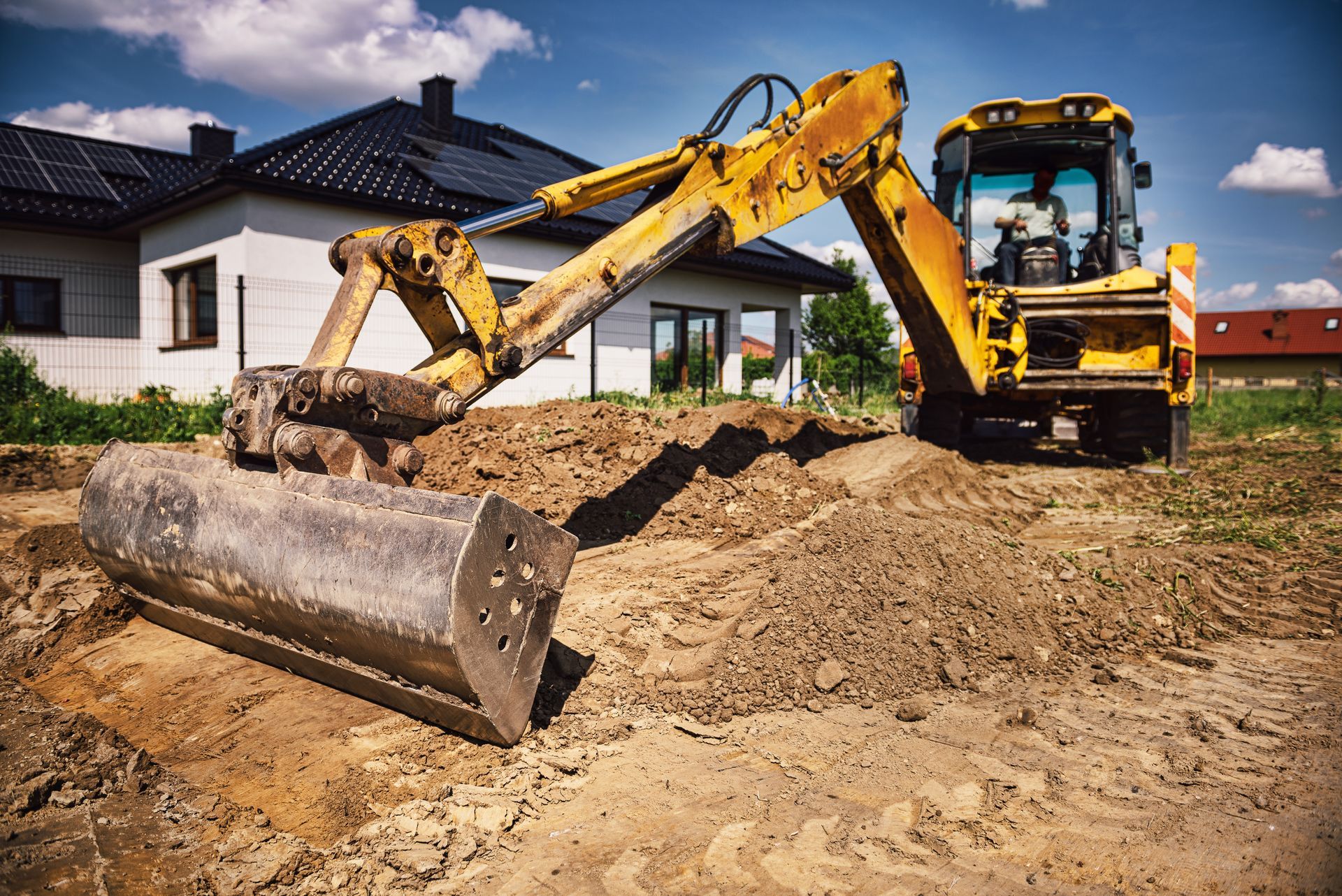
How Site Preparation Addresses Drainage Problems
Grading operations remove topsoil from the building area and stockpile it for later use in landscaping, then cut high areas and fill low spots to create level pads at appropriate elevations. Proper fill placement happens in lifts—layers six to eight inches thick that get compacted individually rather than dumping several feet of material and compacting only the surface, which leaves voids underneath that eventually collapse. Drainage design may include swales that direct runoff away from structures, retention areas where water can collect and percolate into soil, or culverts that allow water to pass under driveways without erosion.
Once site preparation finishes, you notice water drains away from building locations during rain instead of pooling around foundation areas, access routes remain passable in wet conditions because compacted base supports vehicle weight without rutting, and building pads sit visibly higher than surrounding grade. Construction equipment can access the site without getting stuck, material deliveries don't require special scheduling around weather, and foundation contractors work on stable surfaces rather than dealing with soft spots or standing water.
Rural properties often need additional considerations like stock pond construction, pasture drainage to prevent boggy areas, or pad sites for equipment storage that remain firm year-round. Commercial sites may require more extensive work including detention pond excavation for stormwater management, utility trenching coordinated with grading operations, or specialized compaction for areas that will support heavy floor loads or outdoor storage of dense materials.
Questions Before Starting Your Project
Property owners planning construction or land improvement projects throughout Brazoria County frequently ask about timing, soil suitability, and how drainage solutions prevent recurring water problems.
What happens during the grading and leveling process?
Grading involves cutting soil from high areas and using it as fill in low spots, then shaping the surface to direct water flow and compacting fill material in layers to achieve stable density that won't settle significantly under building weight.
How does proper drainage prevent foundation problems?
Grading that slopes away from buildings keeps water from saturating soil next to foundations, reducing hydrostatic pressure against walls and preventing the soil expansion and contraction cycles that cause cracking and settlement in structures.
When should site preparation occur relative to construction schedules?
Site work typically completes weeks before building construction starts, allowing graded surfaces time to settle through rain events and providing opportunity to observe drainage performance and make corrections before foundations get poured.
Why does Lake Jackson clay soil require special compaction attention?
Clay soils can appear firm when dry but lose bearing capacity when saturated, making thorough compaction of fill material critical to prevent settlement—proper compaction forces air and excess moisture out, creating dense soil that maintains stability across moisture variations.
What site conditions indicate drainage work is necessary before building?
Standing water that persists more than a day after rain, soil that remains soft and muddy in specific areas, or visible erosion channels cutting across the property all suggest drainage problems that site preparation should address before construction.
Big Tex Steel provides site preparation that establishes stable building conditions and functional drainage before construction begins. Call (737) 247-1099 to schedule grading and drainage assessment for your Lake Jackson property.