Metal Components Built to Specification
Structural Steel, Welding, and Fabrication in Lake Jackson for handrails, stairwells, and load-bearing structures requiring certified welding and code compliance
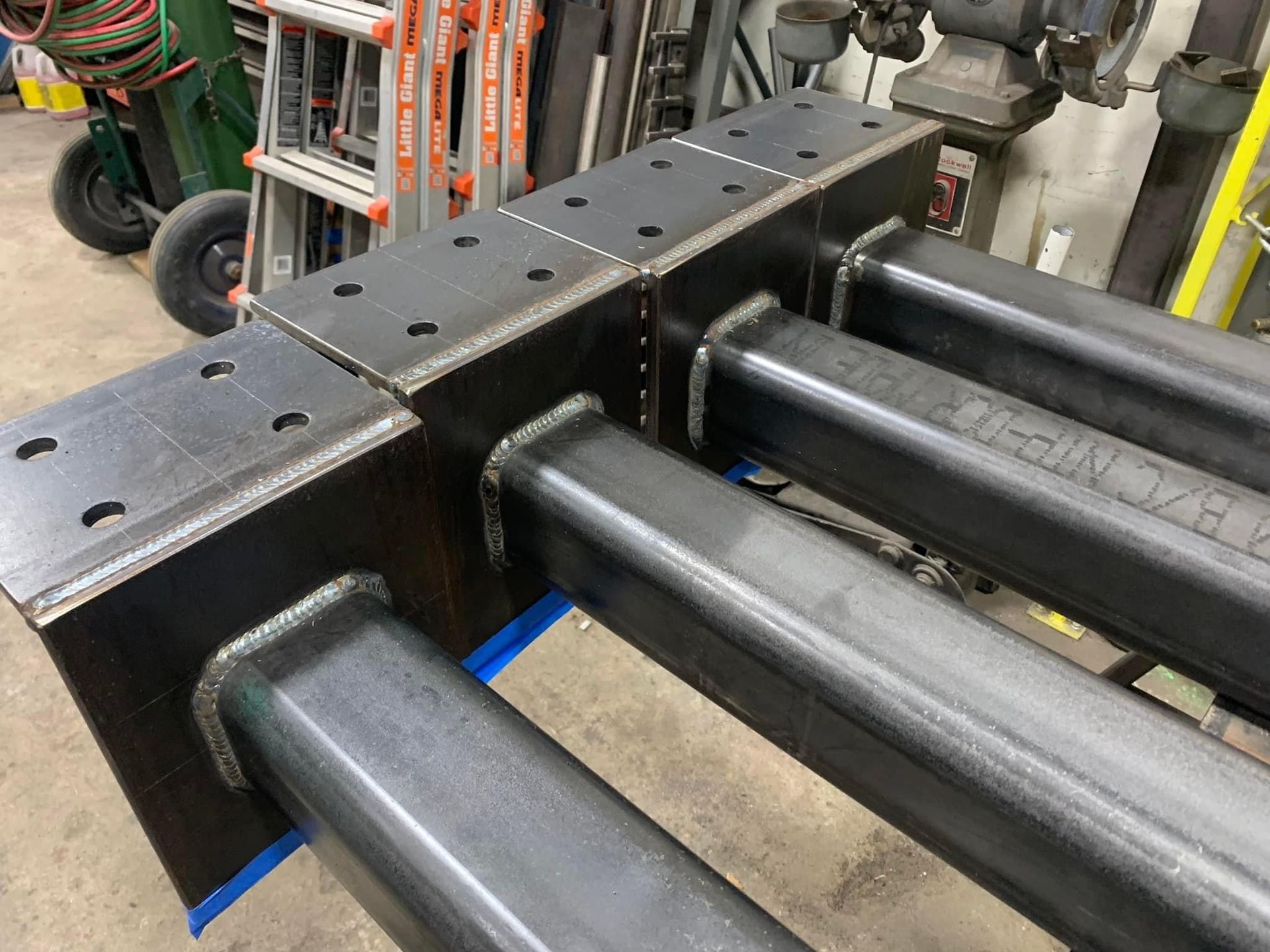
Certified welding failures show up as cracked joints under load, corroded connections where moisture penetrates incomplete welds, and structural deflection that creates safety hazards in commercial facilities. Big Tex Steel provides structural steel fabrication and certified welding services for commercial properties throughout Lake Jackson and Brazoria County, producing handrails, stairwells, and custom metal components engineered for safety and durability. Each fabricated piece undergoes inspection to verify weld penetration, joint strength, and dimensional accuracy before installation.
Structural steel fabrication involves cutting, forming, and joining metal components to exact specifications—handrail systems must meet height and spacing requirements for code compliance, stairwell stringers need precise angle cuts to maintain consistent riser height, and support brackets require load calculations to prevent failure under anticipated weight. Certified welders follow procedures that control heat input, filler material selection, and joint preparation to produce connections stronger than the base metal itself.
Request a fabrication quote to address specific structural steel needs at your commercial property.
What Proper Fabrication Requires
Metal fabrication begins with material selection based on application demands—exterior handrails in coastal areas like Brazoria County typically use galvanized steel or stainless alloys to resist salt air corrosion, while interior structural components may use standard carbon steel with protective coatings. Cutting operations must account for material thickness and required edge quality, with plasma or torch cuts producing rougher edges that need grinding before welding, while shear cuts on thinner stock create cleaner edges suitable for immediate joining.
After installation, properly fabricated components function without visible deflection under normal loads, maintain alignment over seasonal temperature changes, and resist corrosion at connection points where dissimilar metals might otherwise create galvanic reactions. Stairwell systems remain stable without wobble or flex, handrails provide firm support without loose mounting points, and structural supports carry loads without sagging or joint separation.
Fabrication projects may function as standalone installations or integrate with larger construction efforts—adding mezzanine access stairs to an existing warehouse, installing safety railings around rooftop equipment, or creating custom brackets for mechanical system support. Projects requiring engineered calculations need stamped drawings for permit approval, while simpler installations may proceed based on standard code requirements and manufacturer specifications.
Common Questions About This Service
Property managers and business owners usually ask about certification requirements, material options, and how fabricated components integrate with existing structures before starting metal fabrication projects.
What does certified welding certification actually verify?
Welding certification demonstrates that a welder has proven ability to produce sound joints in specific materials using particular processes, with testing that includes visual inspection, destructive testing of sample welds, and verification that completed joints meet strength requirements for structural applications.
How do material choices affect long-term performance in Lake Jackson?
Proximity to the Gulf Coast means metal components face constant humidity and occasional salt spray, making galvanized finishes or stainless steel preferable for exterior applications where rust would compromise structural integrity or create maintenance burdens.
When do handrail installations require engineering review?
Any handrail system subject to commercial building codes needs calculations verifying that posts, rails, and mounting hardware can resist specified lateral loads without exceeding deflection limits, particularly for systems installed on elevated platforms or along stairwells.
Why does heat input matter during welding?
Excessive heat during welding can distort thin materials, alter the metallurgical properties of the base metal, and create residual stresses that lead to cracking—controlled heat input maintains material properties while achieving full penetration welds.
What maintenance do fabricated steel components require?
Exterior components benefit from annual inspection for coating damage and corrosion initiation, with touch-up painting applied to any areas where protective finishes have chipped or worn through to bare metal.
Big Tex Steel fabricates custom metal solutions using certified welding processes and structural engineering standards. Reach out at (737) 247-1099 to discuss handrail, stairwell, or structural steel requirements for your facility.