
Roofs Designed for Long-Term Weather Exposure
Metal Roofing in Lake Jackson for buildings exposed to high winds, heavy rain, and prolonged sun degradation
Metal roofing systems address failures common to asphalt shingles in coastal climates: wind uplift that peels sections away during storms, moisture infiltration through cracked or curled edges, and thermal cycling that shortens material lifespan. Big Tex Steel installs metal roofing on residential homes, agricultural shops, and commercial buildings where durability outlasts composition materials and reduces long-term maintenance. Panels interlock along seams to prevent water entry and attach through concealed fasteners that resist pullout under wind loads.
Installation involves removing existing roofing down to the deck, inspecting sheathing for rot or structural damage, and applying underlayment that provides secondary moisture protection. Metal panels run vertically from ridge to eave in continuous lengths that eliminate horizontal seams where water can migrate. Fasteners penetrate through raised ribs into structural framing rather than flat panel sections where standing water could compromise seals.
Request a roofing estimate based on current roof condition and building dimensions.
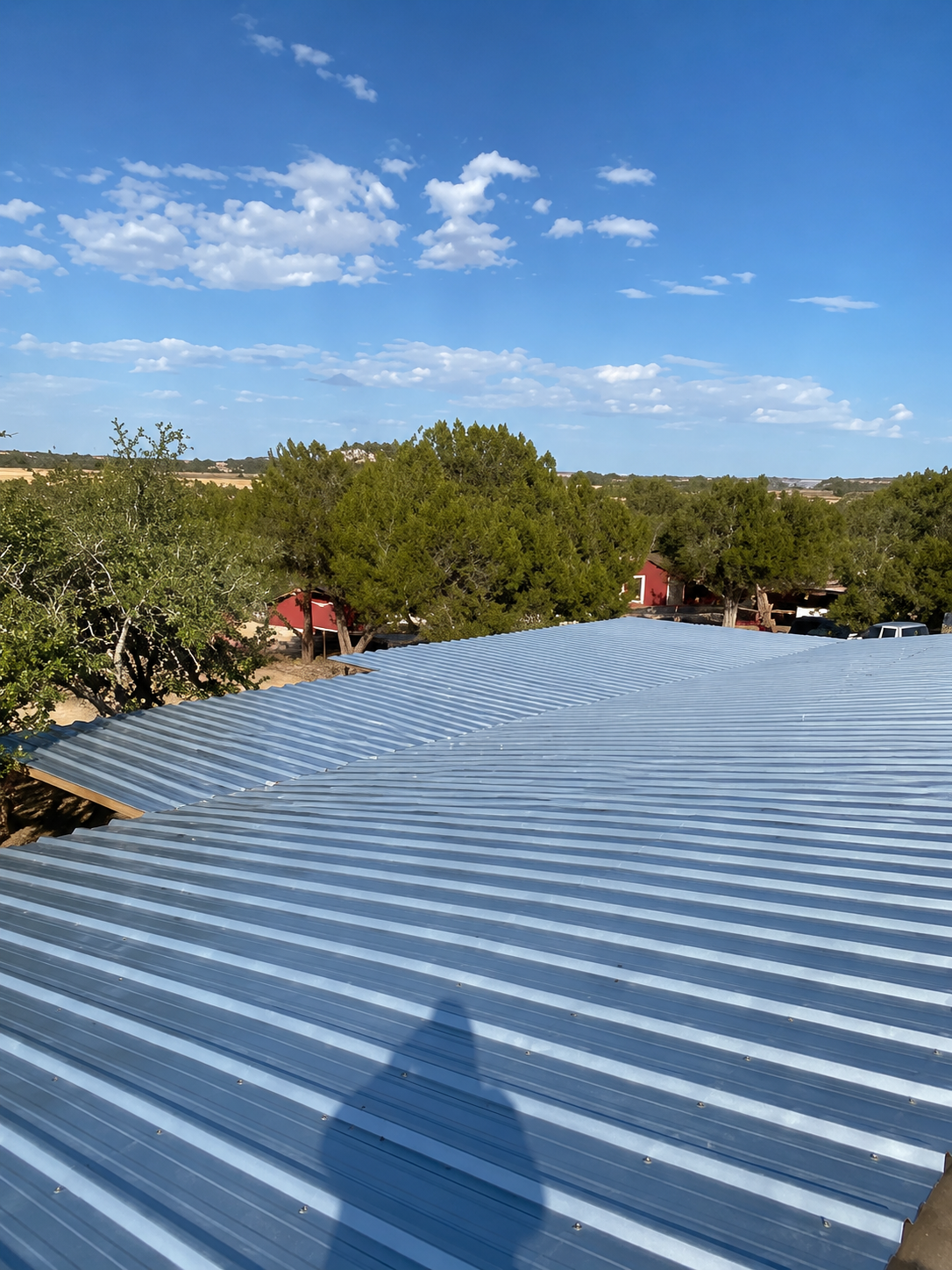
What You Notice Once Metal Roofing Is Finished
Metal roofing reflects solar radiation rather than absorbing it, which reduces attic temperatures and lowers cooling loads during summer months. Interlocking panel seams channel water toward eaves without allowing wind-driven rain to penetrate joints. The surface remains rigid without the flexing or fluttering that signals improper attachment or inadequate fastener density.
You'll see continuous panel runs without visible fasteners on the surface, trim pieces that seal transitions at ridges and valleys, and flashing that integrates with chimneys or vent penetrations without gaps. Interior ceilings remain dry after heavy rain, attic spaces show no signs of moisture staining on sheathing, and the roof maintains its profile without sagging or waviness between rafters.
Panel profiles vary in rib height and spacing, with taller ribs providing greater structural span capacity and improved water shedding on low-slope applications. Coating options include galvanized finishes for agricultural buildings where cost drives decisions and painted or stone-coated finishes for residential installations where appearance matters. Proper installation includes ventilation that prevents condensation on the underside of panels where temperature differentials exist.
Common Questions About This Service
Building owners considering metal roofing often ask about installation processes, performance differences, and compatibility with existing structures.
What happens to the old roofing material during installation?
Existing shingles or panels are removed and hauled off-site, the roof deck is inspected for damage, and any compromised sheathing is replaced before underlayment and new panels are installed.
How does metal roofing perform in Lake Jackson's storm conditions?
Interlocking seams and concealed fasteners resist wind uplift more effectively than shingles, and the non-porous surface prevents water infiltration even during wind-driven rain events common in coastal storms.
When is metal roofing a better choice than composition shingles?
Metal roofing makes sense for buildings where longevity justifies higher upfront cost, for structures exposed to high winds or salt air, and for applications where reduced cooling costs offset installation expenses over time.
How are penetrations like vents and chimneys sealed?
Flashing is custom-formed to wrap penetrations and integrate with panel ribs, sealed with high-grade caulking that remains flexible through thermal expansion, and fastened to prevent separation during wind events.
What determines the slope requirements for metal roofing?
Most metal roofing systems require a minimum slope of three-in-twelve to ensure proper water drainage, though some standing-seam profiles can perform on slopes as low as one-in-twelve with additional underlayment and seam sealing.
Big Tex Steel evaluates roof framing, sheathing condition, and ventilation before recommending panel profiles and fastening methods. Schedule a site inspection to review metal roofing options and replacement timelines for your building.